
Leave the Leaves | Planting Seeds in Winter | Bad Bugs Webcast
But First… Ideas Please!
We need a new name for our e-newsletter. Truth be told, it’s not going to be weekly. But it will be more then monthly, so we need a new name. Here’s where you can help! Share your name idea by sending an email to craneridgewoodshabitat@gmail.com. The Woodlands folks will pick our 3-5 faves and then run a poll in the next issue for you to pick the best of the rest!
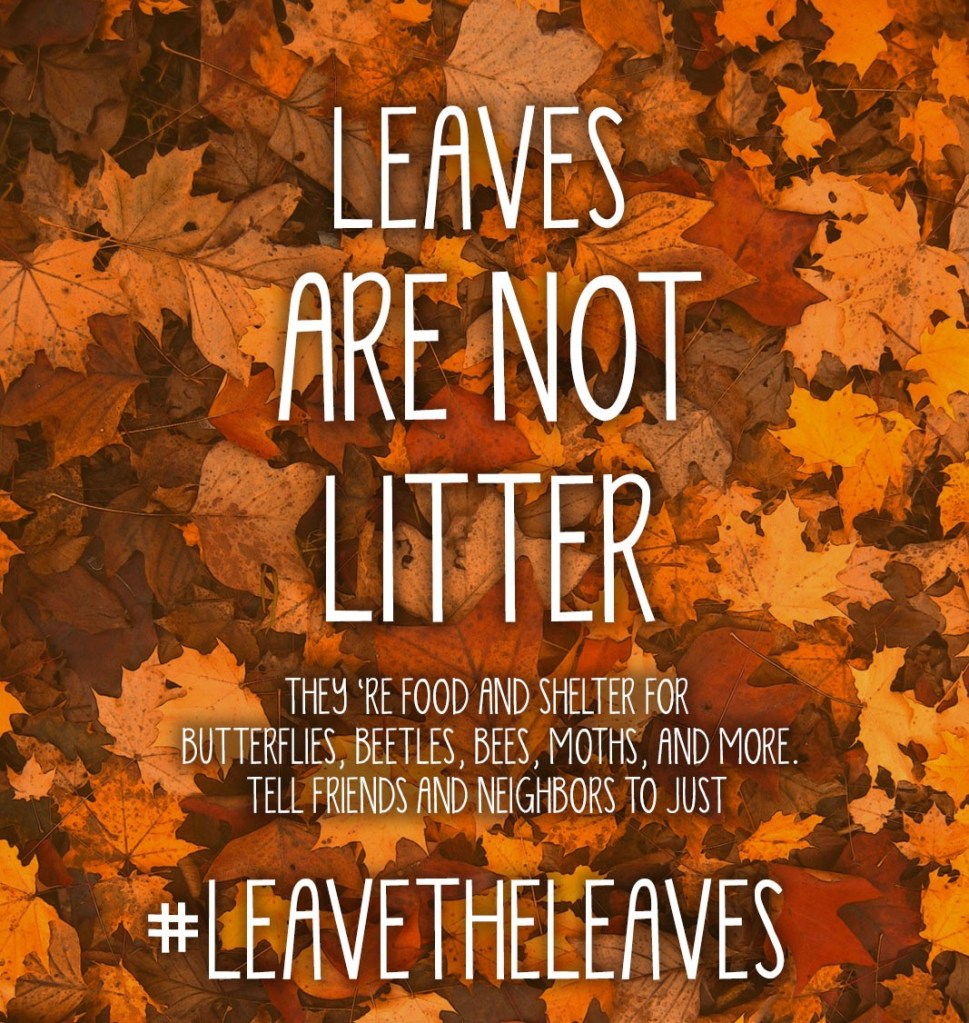
Love the Leaves. Leave Them!
Fall is well underway, and for many folks, annual “prep for winter” work is nearly done. But what do you do with your leaves? Whenever possible, leave the leaves. Here’s why…
While monarch migration is a well-known phenomenon, it’s not the norm when it comes to butterflies. In fact, the vast majority of butterflies and moths overwinter in the landscape as an egg, caterpillar, chrysalis, or adult. In all but the warmest climates, these butterflies use leaf litter for winter cover.
Wooly bear caterpillars tuck themselves into a pile of leaves for protection from cold weather and predators. Red-banded hairstreaks lay their eggs on fallen oak leaves, which become the first food of the caterpillars when they emerge. Luna moths and swallowtail butterflies disguise their cocoons and chrysalises as dried leaves, blending in with the “real” leaves. (source and full article here.)
So…
Planting Seeds in Winter. What??! An Inexpensive Way to Get Lots of Plants.
If the cost of buying plants, including more expensive perennials, gives you pause. There is a better, cheaper way. You can plant perennials (native preferred), annuals, and vegetables using a process called Winter Sowing. It’s easy and a great winter project for everyone… including kids. Watch this 12 minute video to learn how. In a future issue, we’ll share recommendations for what seeds to grow for shady, clay areas in Craneridge.
Gypsy Moths, Wooly Adelgid, and Jumping Worms. Oh My! Webcast: “Bad Bugs”
Our trees are at great risk for impacts from Hemlock Wooly Adelgid, Gypsy Moths, and Beech diseases similar to the devastation we’ve seen from Emerald Ash Borer.
Join Nate Morey, Region 9 DEC Forester for a webcast on how to ID these bad bugs and then what to do. Wed, Nov. 10, at 7 pm. RSVP to Jen Parsons to receive a Zoom link.
Hey! Let’s connect.
We’d love to hear your ideas for future topics. Learn more about our Woodlands & Habitat efforts. Want to help? We’re looking for stewards and volunteers to do a number of outdoor tasks starting in the Spring. From easy to challenging.
Get Updates to Your Inbox!
If you haven’t yet, add your email below, and you’ll receive updates as soon as they’re published. You’ll also get updates on all Craneridge happenings. You can unsubscribe at any time.
Sign up for Email Updates
 Craneridge Homeowners Association
You must be logged in to post a comment.